
- March 6, 2026
- By: admin
- No Comments
Differences Between TIA (Mini-Stroke) and Major Stroke — What You Must Know
A stroke needs urgent medical help because it is a life-threatening condition. Many people mistake a TIA (transient ischemic attack), which people refer to as a mini-stroke, for a major stroke. The two conditions show identical symptoms, yet they produce different effects and long-term results. The difference between the two conditions will help you make fast decisions to stop brain damage from developing into permanent damage.
At CerebrumCor Clinic doctors use early diagnosis methods together with stroke prevention strategies to safeguard brain health while minimizing medical complications.
What is a TIA (Mini-Stroke)?
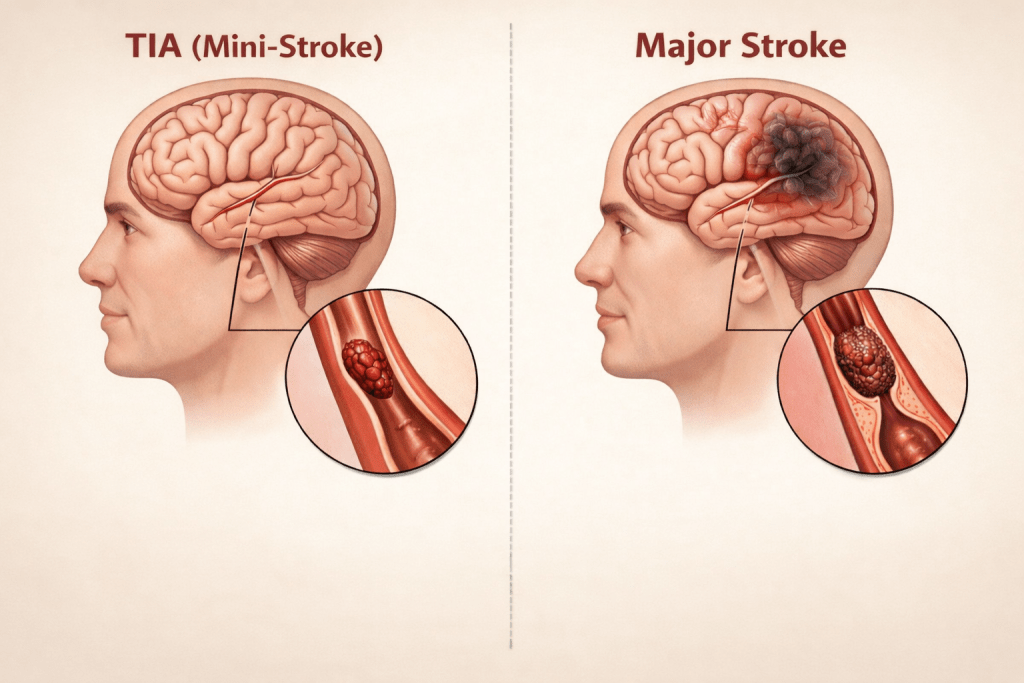
A TIA (Transient Ischemic Attack) occurs when blood flow to a part of the brain is temporarily blocked. The blockage lasts for a short time period, which typically ends between several minutes and several hours.
A TIA warns about serious medical conditions even when all symptoms have vanished. The condition shows that without appropriate treatment, the patient faces high chances of experiencing a major stroke.
Key Features of TIA:
Symptoms last less than 24 hours (often 5–30 minutes)
No permanent brain damage
The individual experiences temporary weakness and numbness and speech difficulty
The person develops sudden vision problems
The condition serves as a warning indicator for upcoming stroke events.
What is a Major Stroke?
A major stroke happens when blood flow to the brain stays blocked for an extended period during an ischaemic stroke or when a blood vessel breaks during a haemorrhagic stroke. This leads to permanent brain cell damage.
Major strokes can result in long-term disability, paralysis, speech problems, memory loss, or even death if not treated promptly.
Key Features of Major Stroke:
Symptoms last longer than 24 hours
Permanent brain damage
The condition causes paralysis that affects one side of the body
The person experiences extreme challenges with both communication and eating
The individual has difficulty maintaining balance
The individual may lose consciousness at times
Common Symptoms of Both TIA and Stroke
Both conditions share similar warning signs. Use the FAST method to identify stroke symptoms:
F – Face drooping
A – Arm weakness
S – Speech difficulty
T – Time to call emergency services
The condition presents with other symptoms which include:
Sudden confusion
Severe headache
Dizziness or balance issues
Blurred or double vision
Major Differences Between TIA and Stroke
Duration
TIA symptoms exist for a temporary period.
Major stroke symptoms stay with the patient but become more severe.
Brain Damage
TIA fails to create any lasting brain damage.
Major strokes cause permanent brain damage.
Risk Level
TIA serves as a preliminary danger indication.
Major strokes create an urgent medical situation that endangers life.
Recovery
Most people who experience TIA will reach complete recovery.
Patients who experience major strokes need extended medical treatment for rehabilitation.
Conclusion
The symptoms of TIA and major stroke are similar, yet their results show different outcomes. The TIA serves as a warning sign, whereas the major stroke results in permanent physical harm. People who experience stroke symptoms should go to the hospital immediately because early medical treatment preserves both brain function and life. If you experience any stroke symptoms, consult specialists at CerebrumCor Clinic immediately for expert stroke evaluation and prevention care.


 by
by 